
Dog Tick Removal: How to Remove a Tick Safely
Found a tick on your dog? Here’s what to do.
Removing a tick isn’t difficult when you know the right technique. I’ll show you how to remove it safely, what not to do, and what to check once the tick is out.

What You’ll Need to Remove a Tick From Your Dog
Before you start, bring your dog somewhere with good light so you can clearly see the tick and the skin around it.
Have these ready:
- Fine-tipped tweezers or a purpose-designed tick removal tool
- Disposable gloves
- Soap and water for cleaning the bite area afterward
- A small sealed container or zip-top bag for the removed tick
Using a tick removal tool?
Check its instructions before you start. Some tools are designed to twist or lever the tick out, while fine-tipped tweezers use a steady upward pull. They shouldn’t automatically be used the same way.
5 Simple Steps for Dog Tick Removal
1. Get your dog settled and find the tick.
Bring your dog into a well-lit area and put on your gloves. Part the hair around the tick so you can clearly see where it is attached to the skin.
2. Get hold of the tick correctly.
If you’re using fine-tipped tweezers, grasp the tick as close to your dog’s skin as possible. Try not to squeeze the tick’s body.
If you’re using a purpose-designed tick removal tool, position it according to the manufacturer’s instructions. Different tools work differently, so don’t assume they should all be pulled straight upward like tweezers. Some purpose-designed tools use a turning or levering action instead.
3. Remove the tick.
With tweezers, pull upward using slow, steady, even pressure. Don’t jerk or twist. Once the tick releases, put it straight into your sealed container or bag rather than crushing it between your fingers.
4. Check the bite area.
Take a close look at the spot where the tick was attached. If some of the tick’s mouthparts remain and you can easily remove them with clean tweezers, you can do so. If they won’t come out easily, don’t dig into your dog’s skin trying to get them out. Leave them alone and allow the skin to heal, and contact your vet if you’re concerned.
5. Clean up and check your dog again.
Clean the bite area and your hands with soap and water, and clean your tweezers or tick-removal tool too. Then give your dog another careful check in case there is more than one tick.
Dispose of the tick safely. Put the removed tick in a sealed container or bag so you don’t have to handle it again. If you’re concerned about your dog becoming unwell after the bite, you may want to keep the tick temporarily in case your veterinarian wants to see it.
Don’t Try to Make the Tick “Back Out”
Skip the petroleum jelly, nail polish, heat and other home remedies. The safest approach is to physically remove the tick promptly rather than trying to irritate it into letting go.
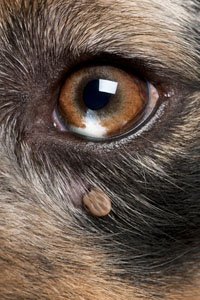
What to Do After Removing a Tick
Keep an eye on the bite area over the next few days for increasing redness, swelling, heat or other signs that it’s becoming inflamed.
Also keep an eye on your dog. Signs of tick-borne illness don’t necessarily appear immediately after a tick bite.
When Should You Call Your Vet?
Contact your vet if:
- you can’t safely remove the tick or it’s in a particularly difficult or sensitive spot
- your dog has a large number of attached ticks
- the bite becomes increasingly red, swollen, painful or otherwise concerning
- you’re worried about something remaining in the skin
- your dog becomes unwell following a tick bite, including changes such as unusual tiredness, reduced appetite or lameness
The Tick Removal Tool I’ve Found Easiest to Use
Of the tick removal tools I’ve used, the Ticked Off tool is my favorite. It’s simple, quick and—one of my favorite parts—I don’t have to touch the tick.
It isn’t the only way to remove a tick; fine-tipped tweezers work too. But if you’re regularly checking dogs for ticks, I’ve found a purpose-designed tool like this very handy to have around.
See the Ticked Off Tool in Action
Why Is It Important to Remove Ticks?
Ticks aren’t just irritating little hitchhikers. Some ticks can carry and transmit diseases that affect dogs and people, so finding and removing an attached tick promptly is important.
Tick-borne diseases affecting dogs can include Lyme disease, ehrlichiosis and Rocky Mountain spotted fever. Finding a tick doesn’t mean your dog will become ill, but it does mean it’s worth removing it properly and keeping an eye on your dog afterward.
How to Help Prevent Ticks on Your Dog
Preventing ticks from attaching in the first place is certainly easier than removing them later.
Check your dog regularly for ticks, particularly after walks through wooded, brushy or grassy areas. Pay close attention around the ears and eyelids, under the collar and front legs, between the toes and back legs, and around the tail.
If ticks are a problem where you live or where you walk your dog, talk to your veterinarian about a suitable tick preventive. The best choice can depend on your dog, where you live and the other pets in your household, so I wouldn’t rely on one product being the right answer for every dog.
For more everyday advice on keeping your dog healthy, comfortable and safe, visit my Dog Care Tips guide.