
Puppy Weight Calculator by Age & Breed Size
Estimate how big your puppy may get — using real growth patterns
Curious how big your puppy might be when fully grown?
This interactive puppy weight calculator estimates adult size based on your puppy’s current age, weight, and expected breed size — helping you understand what’s typical as they grow.
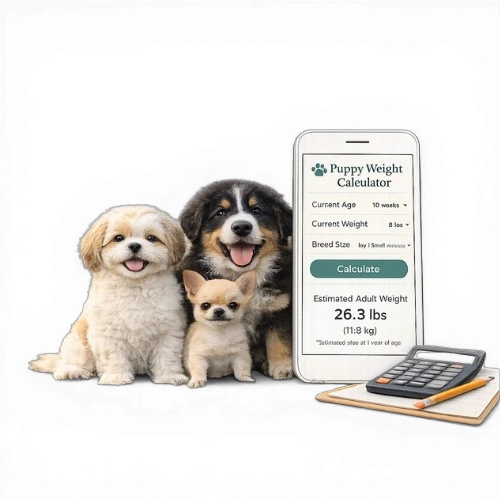
Calculate Your Puppy’s Adult Weight
Puppy Weight Calculator
How to Use the Puppy Weight Calculator
Using the calculator is quick and simple. Just enter your puppy’s current age, current weight, and expected breed size to get an estimated adult weight based on typical growth patterns.
If you’re not sure which breed size category your puppy fits into — especially for mixed breeds — choose the size you expect your puppy to reach as an adult. If they could reasonably fit into two categories, try both and compare the results.
For best results, update your puppy’s weight regularly and focus on the trend over time rather than a single number.
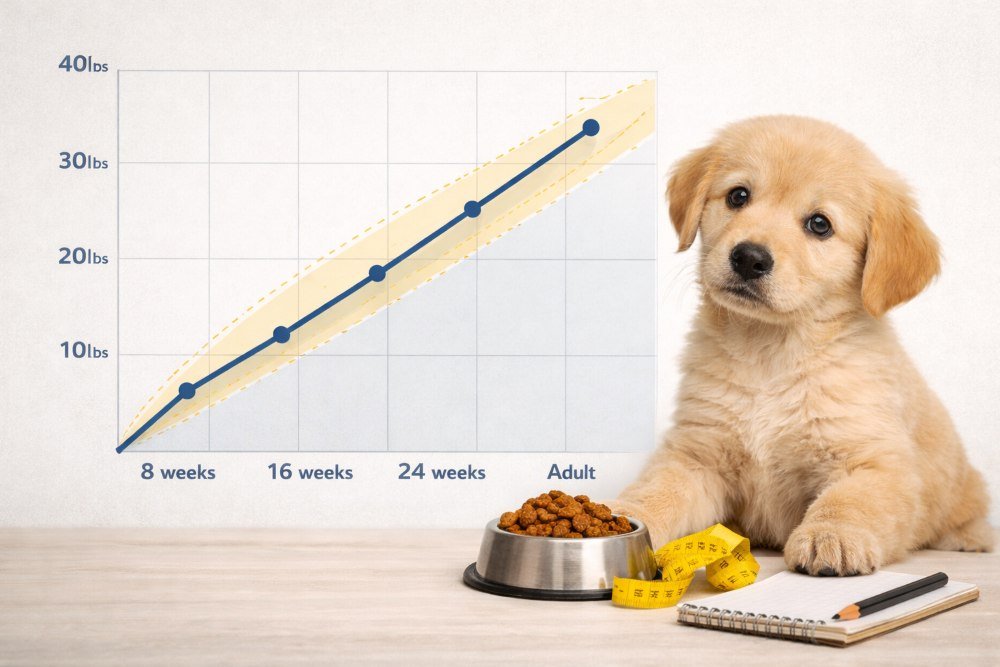
How Accurate Is a Puppy Weight Calculator?
A puppy weight calculator can give you a useful ballpark figure, but no calculator can tell you exactly how much your puppy will weigh as an adult.
This calculator uses published puppy growth research rather than assuming that puppies gain weight at the same rate every week. It compares your puppy’s age and current weight with growth patterns from breeds in a similar adult-size group to estimate how much growing may still be ahead.
But puppies don’t read research papers! Genetics, breed mix, sex, nutrition, body condition and individual growth rate can all affect your puppy’s final size.
That’s why I would treat the result as a guide rather than a target weight. If you weigh your puppy regularly, their growth pattern over time will tell you much more than any single prediction.
How the Puppy Weight Calculator Works
Like most puppy weight calculators you’ll find online, this one gives you a rough estimate of your puppy’s adult weight based on the information you know now. No calculator can predict a puppy’s final weight with complete accuracy — there are simply too many individual differences involved.
What makes this calculator a little different is that it also takes your puppy’s expected breed size into account. Instead of assuming every puppy grows at the same rate, you choose whether your puppy is expected to be toy, small, medium, large or giant.
That matters because puppies of different sizes follow different growth patterns. Smaller dogs generally reach their adult size sooner, while large and giant breeds tend to grow for longer.
The result should still be treated as a ballpark estimate rather than a guarantee, but using your puppy’s expected size helps make the estimate more realistic.
The basic idea behind the calculation
The calculator starts with your puppy’s current weight and age in weeks, then compares their age with published growth patterns for breeds in a similar adult-size group.
These growth patterns reflect the fact that puppies don’t grow at a steady rate from birth to adulthood. Growth is faster at some stages and gradually slows as a puppy gets closer to adult size.
The calculator uses that growth pattern to estimate roughly how much of your puppy’s adult weight they may have reached, then uses their current weight to estimate their eventual adult weight.
It’s still only an estimate. Genetics, breed mix, body condition and individual growth rate can all affect your puppy’s final size, which is why the result is best used as a useful guide rather than an exact prediction.
How to choose your puppy’s breed size
Choose the size your puppy is expected to be as an adult, rather than the size they are now.
If you know your puppy’s breed, use the adult size that is typical for that breed. If you have a mixed-breed puppy, use what you know about the parents if possible. Their size can give you a useful clue about where your puppy may eventually fit.
If you’re not sure, use these general adult-weight categories:
Toy: up to 12 lbs
Small: 12–25 lbs
Medium: 25–50 lbs
Large: 50–100 lbs
Giant: 100+ lbs
If your puppy could reasonably fall into two categories, try the calculator with both. This can give you a better idea of how much the estimate changes depending on their eventual size.
Why results can change as your puppy grows
Puppies don’t gain weight at a perfectly steady pace. They have growth spurts, slower periods and the occasional plateau — all perfectly capable of making last month’s estimate look a little different from this month’s.
That’s why it’s useful to weigh your puppy regularly and look at their overall growth trend, rather than getting too attached to one predicted number. As your puppy gets older and you have more weight measurements to compare, you’ll get a much clearer picture of how they’re actually growing.
A quick reminder about estimates
Your puppy is an individual, not a mathematical formula. Genetics, breed mix, nutrition, body condition and individual growth rate can all influence their eventual adult size.
Use the calculator as a handy starting point, then compare the result with the puppy weight charts on this website. If you’re concerned about how quickly your puppy is gaining or losing weight, or about their body condition, speak to your veterinarian.
Breed Size Categories Explained
Breed size affects not only how big a puppy may eventually become, but also how long they typically continue growing. Smaller dogs generally mature sooner, while large and giant breeds can take considerably longer to reach their adult size.
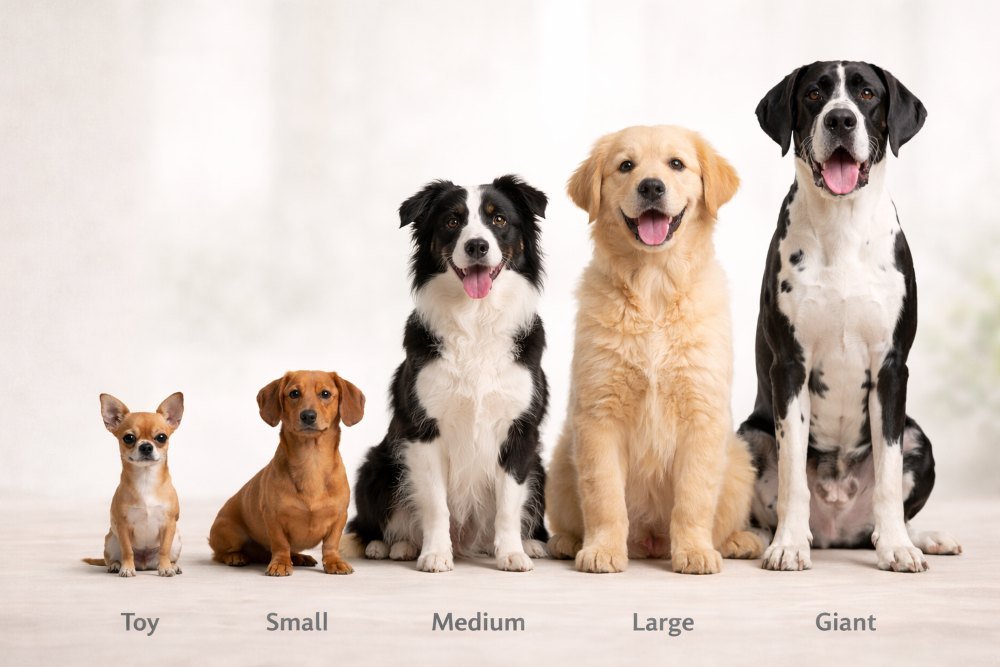
| Breed Size | Adult Weight Range | Typically Fully Grown By |
|---|---|---|
| Toy | Up to 12 lbs | 6–9 months |
| Small | 12–25 lbs | 8–12 months |
| Medium | 25–50 lbs | 12–15 months |
| Large | 50–100 lbs | 15–18 months |
| Giant | 100+ lbs | 18–36 months |
These are general guidelines rather than strict cut-off points. Genetics, breed and individual development can all affect when a puppy finishes growing.
What if my puppy falls between two sizes?
This is especially common with mixed-breed puppies or breeds that fall near the upper or lower end of a size range.
If you’re unsure which category to choose, run the calculator using the two most likely sizes and compare the results. This will show you how much the estimate changes depending on the growth pattern used.
If you know the approximate adult size of your puppy’s parents, that can also help you decide which category is the better fit.
Why breed size matters so much
Smaller puppies tend to grow quickly and finish earlier, while larger and giant breeds generally grow for longer. Using the correct size category helps the calculator compare your puppy with a more appropriate growth pattern rather than treating every puppy as though they develop at the same rate.
If you’d like a visual comparison of how puppies grow at different sizes, you can also explore puppy weight charts by age and breed size.

Other Factors That Affect Puppy Growth
Even the best puppy weight calculator or chart can’t account for every variable. Puppies grow at different rates — sometimes even within the same litter — and several factors can influence their growth and eventual adult size.
Genetics
Genetics play a major role in determining your puppy’s eventual size and build. The size of the parents can be particularly helpful when you’re trying to estimate how big a puppy may become.
If your puppy came from a breeder, ask about the size of the parents and, if available, puppies from previous litters. Mixed-breed puppies can be harder to predict, especially when their parents are very different sizes.
Nutrition
Growing puppies need a complete and balanced diet appropriate for their age and expected adult size. Both too little and too much food can affect healthy development, and faster weight gain isn’t necessarily better — particularly for large and giant breeds.
Rather than trying to make your puppy match a particular number on a chart, aim for steady growth and a healthy body condition. Your veterinarian can help if you’re unsure how much your puppy should be eating.
Spaying and Neutering
Spaying or neutering can affect growth and body weight, although the effects vary between individual dogs and breeds. The timing of the procedure may also influence growth and development.
Your veterinarian can advise you on the most appropriate timing for your puppy, taking their breed, size, sex and individual health into account.
Exercise and Activity Level
Regular, age-appropriate activity helps support healthy development and body condition. How much exercise a puppy needs depends on their age, breed, size and individual energy level.
Growing puppies also need plenty of rest, and exercise should be appropriate for their stage of development rather than focused on burning calories or controlling the number on the scale.
Health and Growth Spurts
Puppies don’t grow in perfectly straight lines. Growth spurts, slower periods and changes in appetite can all occur as they develop, which is another reason an adult-weight estimate may change over time.
Small variations aren’t necessarily a problem, but unexplained weight loss, very rapid weight gain, poor growth or concerns about your puppy’s body condition are worth discussing with your veterinarian.
Puppy Weight Calculator FAQs
How accurate is a puppy weight calculator?
A puppy weight calculator can give you a useful estimate, but it can’t predict your puppy’s exact adult weight. Genetics, breed mix, body condition, nutrition and individual growth patterns can all affect their eventual size.
Our calculator uses your puppy’s age, current weight and expected adult-size category together with published puppy growth patterns to produce a ballpark estimate. It’s best used alongside regular weigh-ins so you can follow how your puppy is actually growing over time.
Why does my puppy’s estimated adult weight keep changing?
Puppies don’t grow at a perfectly steady rate. Growth spurts, slower periods and changes in body condition can all affect the estimate you get at different ages.
This is normal. Rather than focusing on one predicted number, weigh your puppy regularly and watch their overall growth trend. As your puppy gets older, you’ll have a clearer picture of the adult size they’re heading toward.
Can I use a puppy weight calculator for mixed-breed dogs?
Yes, but the estimate can be less predictable if you don’t know the breeds or sizes of your puppy’s parents.
Choose the adult-size category that seems most likely based on what you know about your puppy’s breed mix, parents and current build. If they could reasonably fit into two categories, try both and compare the results.
For mixed-breed puppies especially, treat the result as a ballpark estimate rather than an exact prediction.
What age should I use the puppy weight calculator?
You can use the calculator while your puppy is growing, but estimates made when a puppy is very young are naturally less reliable. For that reason, the calculator will flag results for puppies under 12 weeks as less certain.
Try it again as your puppy grows and you collect more weight measurements. Comparing estimates over time is more useful than relying on a single prediction made early in puppyhood.
Is it normal if my puppy is above or below the chart range?
It can be. Puppy growth charts show typical growth patterns, but individual puppies won’t all follow them exactly. Breed, genetics, body condition and individual development can all make a difference.
What matters more is your puppy’s growth trend and overall body condition. If they’re consistently well above or below the expected range, or their weight changes suddenly, check with your veterinarian.
Should I worry if my puppy is growing faster than expected?
Not necessarily. Puppies can go through periods of faster and slower growth, and some variation is normal.
Rather than judging growth by weight alone, keep an eye on your puppy’s overall body condition and growth trend. If weight gain seems unusually rapid, your puppy is becoming overweight, or you have any concerns about their development, speak to your veterinarian.
Can a puppy weight calculator replace vet check-ups?
No. A puppy weight calculator is simply a tool for estimating eventual adult weight — it can’t assess whether your puppy is growing healthily or has an appropriate body condition.
Regular veterinary check-ups allow your vet to assess your puppy’s growth, development and overall health. If you’re concerned about unexpected weight gain or loss, poor growth or your puppy’s body condition, speak to your veterinarian.
Sources & Research
The puppy weight calculator on this page uses growth patterns derived from published research into body-weight changes in puppies of different breeds. The calculator groups these published breed growth patterns into broader size categories to provide a practical estimate based on your puppy’s age, current weight and expected adult size.
The result is intended as a rough adult-weight estimate, not a prediction of healthy or ideal weight.
Hawthorne AJ, Booles D, Nugent PA, Gettinby G, Wilkinson J. Body-Weight Changes during Growth in Puppies of Different Breeds. The Journal of Nutrition. 2004;134(8):2027S–2030S. DOI: 10.1093/jn/134.8.2027S.
Salt C, Morris PJ, German AJ, Wilson D, Lund EM, Cole TJ, et al. Growth standard charts for monitoring bodyweight in dogs of different sizes. PLOS ONE. 2017;12(9). DOI: 10.1371/journal.pone.0182064.
WALTHAM Petcare Science Institute. WALTHAM Puppy Growth Charts. Evidence-based growth charts for monitoring puppy growth according to expected adult size and sex.