
Older Dog Care: Helping Your Dog Age Well
Practical care for your dog’s senior years
As your dog gets older, a few thoughtful changes can make a big difference. Learn what to watch for and how to adapt their diet, exercise, veterinary care and everyday routine to help keep them healthy, comfortable and enjoying life.
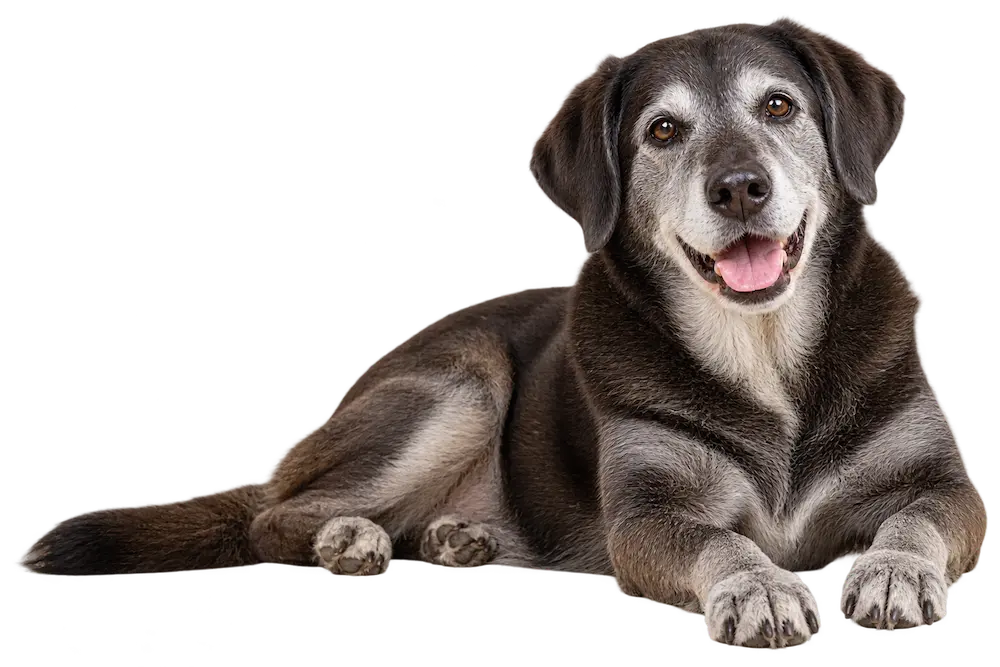
Caring for Your Dog as They Get Older
Getting older doesn’t mean your dog suddenly becomes fragile or stops enjoying the things they’ve always loved. But their needs do change, sometimes gradually enough that you don’t notice straight away.
The important thing is to pay attention to those changes. A little stiffness, a change in appetite, sleeping more, slowing down on walks or behaving differently may simply mean you need to adjust their routine — but don’t automatically put every new change down to “just old age.” Pain and health problems can sometimes look like normal aging, so anything new, persistent or worrying is worth mentioning to your vet.
The good news is that there is plenty you can do to make those senior years comfortable and enjoyable. From keeping an eye on weight and mobility to looking after teeth, senses and mental wellbeing, small changes to everyday care can make a real difference.
This guide focuses on the changes that come with getting older. For advice on everyday care at every stage of life, visit Dog Care Tips.
When Is My Dog Considered Senior?
There isn’t one magic age when every dog suddenly becomes a senior. In general, larger dogs tend to age more quickly than smaller dogs, so a Great Dane may reach their senior years while a much smaller dog of the same age is still firmly middle-aged.
That’s why your dog’s size, breed, health and individual circumstances matter more than simply saying that every dog becomes “old” at seven.
| Dog Size | Approximate Senior Age |
|---|---|
| Small — 20 lb or less | 9–11 years |
| Medium — 21–50 lb | 7–9 years |
| Large — 51–100 lb | 6–7 years |
| Giant — over 100 lb | 4–5 years |
How Old Is Your Dog in Human Years?
You’ve probably heard the old rule that one dog year equals seven human years. It’s a handy idea, but dogs don’t actually age that way. They mature much faster during their early years, and their rate of aging also varies with size.
Want to see roughly where your dog falls? Choose their size and enter their age in the calculator below.
A quick note: This is an estimate rather than an exact biological conversion. Breed, size, genetics and overall health all influence how an individual dog ages.
Dog Age to Human Age Calculator
Choose your dog's size and enter their current age to get an approximate human-age equivalent.
Please choose your dog's size and enter their age.
This is an estimate rather than a measure of your dog's health or biological age. Breed, size, genetics and overall health can all influence how an individual dog ages.
How it works: The calculator estimates the first dog year at about 15 human years and the second at about 24. After that, the estimate is adjusted according to your dog's size, because larger dogs generally age more quickly than smaller dogs.
Food and Healthy Weight for Older Dogs
One of the most important things you can do for your older dog is keep an eye on their weight and body condition. Carrying extra weight puts additional strain on aging joints and can make staying active more difficult, while unexplained weight loss can also be a sign that something isn’t right.
Your dog’s nutritional needs may change as they get older, but that doesn’t necessarily mean they need a food labelled “senior.” Activity level, body condition and any health problems matter too, so look at the dog in front of you rather than simply changing food because they’ve reached a certain birthday.
One thing I noticed with Hudson, my German Shepherd, was that he actually became more interested in food as he got older. When he was younger, getting him to eat his dinner could be a challenge, but from around five onwards his appetite seemed to increase.
Then along came Ava, who was the picky one and quite happy to leave food behind. Hudson was equally happy to help her out! Dinner time meant I had to be “on guard” to make sure he didn’t get two dinners while she got half of one.
So don’t assume an older dog will automatically eat less. Keep an eye on their weight, appetite and body condition and adjust what you’re feeding to the individual dog.
Watch for changes, not just pounds
A noticeable change in appetite or unexplained weight gain or loss shouldn’t automatically be blamed on getting older. If the change is new, persistent or significant, talk to your vet.
Exercise, Joints and Mobility
Getting older doesn’t mean your dog should stop exercising. Staying active helps maintain muscle strength, mobility and, just as importantly, gives them something to look forward to.
What may need to change is how they exercise. Your older dog might be happier with shorter, gentler walks than one long hike, and you may need to adjust the pace as their abilities change.
Watch for Changes in How Your Dog Moves
Some changes are easy to miss because they can creep up gradually. Watch for things such as:
- reluctance to walk, run, jump or climb stairs
- lagging behind on walks
- becoming less active
- limping or stiffness, particularly after resting
- difficulty getting up or lying down
- soreness or reluctance to be touched
- changes in behavior, such as becoming withdrawn or unusually irritable
If you notice a new or persistent change in the way your dog moves, have your vet check it rather than assuming it’s simply part of getting older.
Finding Exercise That Works for Your Older Dog
Regular, manageable exercise is usually much better than doing very little all week and then expecting your senior dog to cope with a marathon outing at the weekend.
Walking is an easy one to adjust—you can shorten the distance, slow the pace or take several shorter walks instead of one long one.
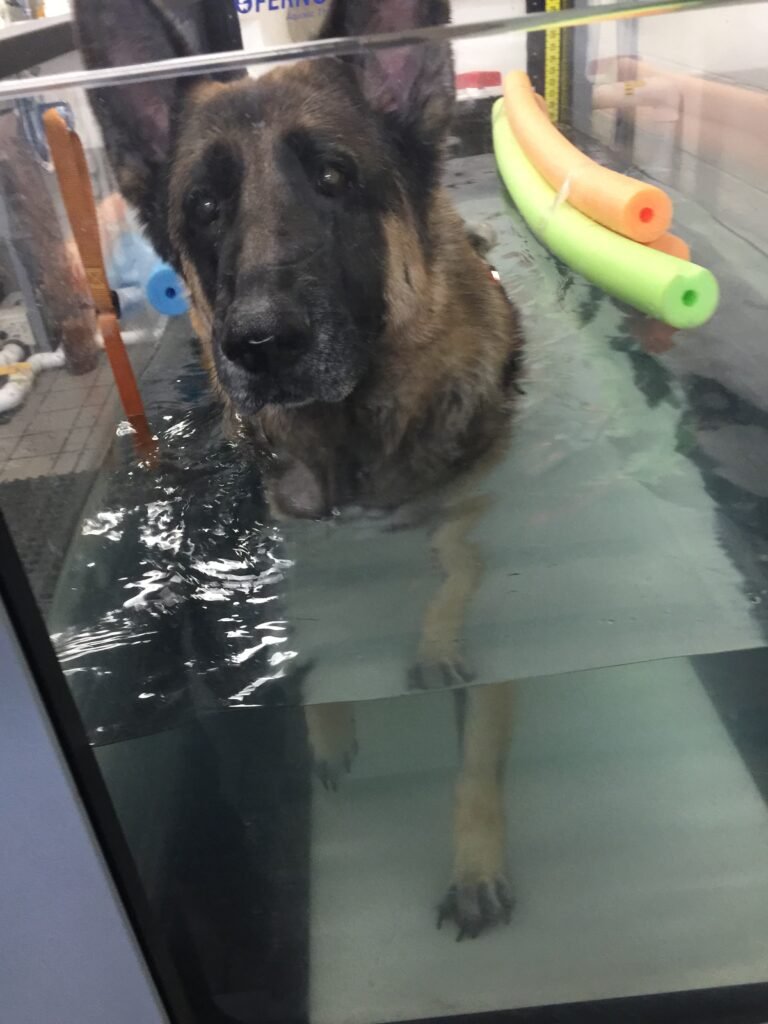
Swimming and hydrotherapy can also provide another way for some dogs to exercise.
Hudson, however, would like me to point out that not every dog thinks swimming is a wonderful idea!
I tried swimming with him and he hated it. We later tried the other form of hydrotherapy—a treadmill under water—and that went much better. I wouldn’t exactly say he loved it, but he seemed to like it (or at least accept it!), and the exercise was supervised by a trained hydrotherapist.
Make Everyday Movement Easier
Sometimes helping an older dog isn’t about more exercise at all—it’s about making everyday movement a little easier.
If your dog struggles with jumping into the car or onto furniture, a ramp or steps can make life much easier. Slippery floors can also become surprisingly difficult for an older dog, so rugs or non-slip runners can give them better traction.
Take another look at the places your dog uses every day. A comfortable bed that’s easy to get in and out of, food and water that are easy to reach, and fewer unnecessary trips up and down stairs can all make a difference.
Don't Forget Your Older Dog's Teeth
Dental problems can become more troublesome as dogs get older, but bad breath, sore gums or difficulty eating shouldn’t simply be written off as another sign of age.
Keep an eye out for changes such as bad breath that suddenly becomes worse, red or bleeding gums, loose or damaged teeth, dropping food, chewing differently or becoming reluctant to eat harder foods. If you notice something unusual, have your vet take a look.
Regular dental care at home can still be useful in the senior years, but don’t start vigorously brushing a painful or unhealthy mouth. If your dog already has significant tartar, sore gums or loose teeth, they need a veterinary dental assessment first.
Something easy to miss
If an older dog suddenly becomes fussy about food, don’t automatically assume their appetite has changed. Sometimes the problem is that eating hurts. Watch how they chew as well as how much they eat.
Skin, Coat and Grooming
You may notice changes in your dog’s skin and coat as they get older, but don’t assume every new lump, sore patch or coat change is simply part of aging.
Regular brushing and grooming gives you the perfect opportunity to have a good look—and feel—for anything new. Check through the coat and over the whole body for lumps, bumps, sores, irritated skin or other changes that weren’t there before.
And when I say the whole dog, I mean the whole dog! Don’t forget the belly, paws and those less glamorous areas around the rear end. Your dog may not appreciate the indignity, but it’s much easier to spot a change when you regularly know what’s normal for them.
If you find a new lump or skin change, particularly one that’s growing, changing, sore or bothering your dog, have your vet check it rather than trying to identify it yourself.
Make Grooming Comfortable
Older dogs may not be as comfortable standing through a long grooming session as they once were. If your dog becomes tired, stiff or restless, break grooming into a few shorter sessions rather than trying to finish everything at once.
A non-slip surface can also help a dog who isn’t as steady on their feet. And while you’re brushing, use the opportunity to gently check their paws, nails, ears and skin.
Having problems with dry, itchy or irritated skin? See our guide to the different Dog Skin Conditions.
Eyes, Ears and Changing Senses
It’s not unusual to notice changes in your dog’s sight or hearing as they get older. You might find they don’t respond when you call, seem startled when you approach, hesitate in dim light or become less confident in unfamiliar surroundings.
But don’t automatically assume a change in sight or hearing is simply old age. Eye and ear problems can have other causes, and some may be treatable, so new or noticeable changes are worth discussing with your vet.
Helping Your Dog Adjust
If your dog’s senses aren’t as sharp as they once were, a few simple changes can make life easier.
Try not to keep rearranging furniture if your dog has difficulty seeing. Familiar surroundings help them find their way around confidently. Keep walkways clear, use lights at night where needed, and take a little extra care around stairs or other places where poor vision could cause a fall.
For a dog who’s losing their hearing, avoid suddenly appearing behind them or touching them while they’re asleep. Approach where they can see you and consider using consistent hand signals alongside familiar verbal commands.
Brain and Behavior Changes in Older Dogs
You know your dog’s normal behavior better than anyone, so you’re often the first person to notice when something seems a little “off.”
An older dog may sleep differently, become more anxious or clingy, seem less interested in things they once enjoyed, or occasionally appear confused. Changes like these are easy to put down to old age, but behavior can also change because of pain, illness, sensory loss or cognitive decline.
That’s why a noticeable change in personality or behavior is worth mentioning to your vet rather than simply accepting it as part of getting older.
Signs of Cognitive Decline to Watch For
Canine cognitive dysfunction can affect memory, awareness, learning and behavior. Changes you might notice include:
- seeming lost or confused in familiar surroundings
- getting stuck behind furniture or in corners
- going to the wrong side of a door or appearing unsure how to get through
- changes in sleep, including restlessness or wandering at night
- forgetting previously learned behaviors or house-training
- interacting differently with familiar people or other pets
- becoming unusually anxious, withdrawn or restless
The important point isn’t to try to diagnose cognitive dysfunction yourself. A change in behavior tells you something has changed—it doesn’t tell you why. Your vet can look for pain, illness, sensory problems and other possible causes as well as cognitive decline.
Keep That Older Brain Busy
Getting older doesn’t mean your dog stops needing things to do.
Keep including them in family life and give them opportunities to sniff, explore and use their brain at a level they can comfortably manage. Gentle training, food puzzles, sniffing games and leisurely “sniff walks” can all provide stimulation without requiring strenuous exercise.
And don’t underestimate routine. A familiar rhythm to meals, walks, bedtime and everyday life can be reassuring for an older dog, particularly if their sight, hearing or cognitive abilities are changing.
Don’t dismiss a behavior change as “just old age.”
If your dog suddenly seems confused, anxious, withdrawn, irritable or simply unlike themselves, talk to your vet. Sometimes the explanation is cognitive decline, but pain or another health problem may be responsible.
Veterinary Care for Your Older Dog
Changes Worth Mentioning to Your Vet
Regular veterinary care becomes particularly important as your dog gets older. Some health problems develop gradually, and the first sign may be something quite subtle—a change in weight, appetite, thirst, mobility, sleep or behavior.
Regular checkups also give your vet a useful picture of what’s normal for your dog.
That can make changes easier to spot over time, rather than waiting until something is obviously wrong.
With my own larger dogs, my vet changed them from annual checkups to twice-yearly visits once they reached around seven years old. That was the schedule my vet recommended for my dogs as they got older, rather than a rule that applies to every senior dog.
How often your dog should be examined, and whether bloodwork, urine testing or other screening is appropriate, will depend on their age, health, medications and individual risk factors. Your vet can recommend a schedule that makes sense for your dog.
Contact your vet if you notice a persistent or concerning change in your dog’s:
- appetite, weight, thirst or toileting
- walking, movement or ability to get comfortable
- breathing, coughing or stamina
- skin, coat, lumps or bumps
- eyes, ears, sight or hearing
- mouth, teeth or ability to eat comfortably
- sleep, behavior, personality or awareness
You don’t need to know what’s causing the change. Noticing that something is different is enough reason to ask.
Enjoying the Senior Years Together
Getting older brings changes, but it doesn’t mean the fun has to stop.
Your dog may need shorter walks, a little help getting into the car or a few more naps than they used to, but they’re still the same dog who wants to be part of your life.
Pay attention to the little changes, adapt things when you need to, and don’t be afraid to ask your vet when something doesn’t seem right. Most of all, enjoy this stage of life together. Those slower walks aren’t necessarily a bad thing — sometimes they just give you both more time to stop and sniff along the way.
References
- American Animal Hospital Association (AAHA). 2023 AAHA Senior Care Guidelines for Dogs and Cats. AAHA Senior Care Guidelines
- American Animal Hospital Association (AAHA). 2019 AAHA Canine Life Stage Guidelines. AAHA Canine Life Stage Guidelines
- VCA Animal Hospitals. When Is Your Dog or Cat Considered a Senior? VCA senior life-stage guide
- VCA Animal Hospitals. Feeding Mature and Senior Dogs. VCA senior dog nutrition guide