
Cleaning Dogs’ Ears Safely at Home
A simple, stress-free way to get the job done
Cleaning your dog’s ears isn’t always the easiest job—especially when your dog has other ideas! I’ll show you what works for me, from getting your dog comfortable with ear handling to cleaning those ears safely. And just as importantly, we’ll look at when you should leave them alone and call your vet instead.
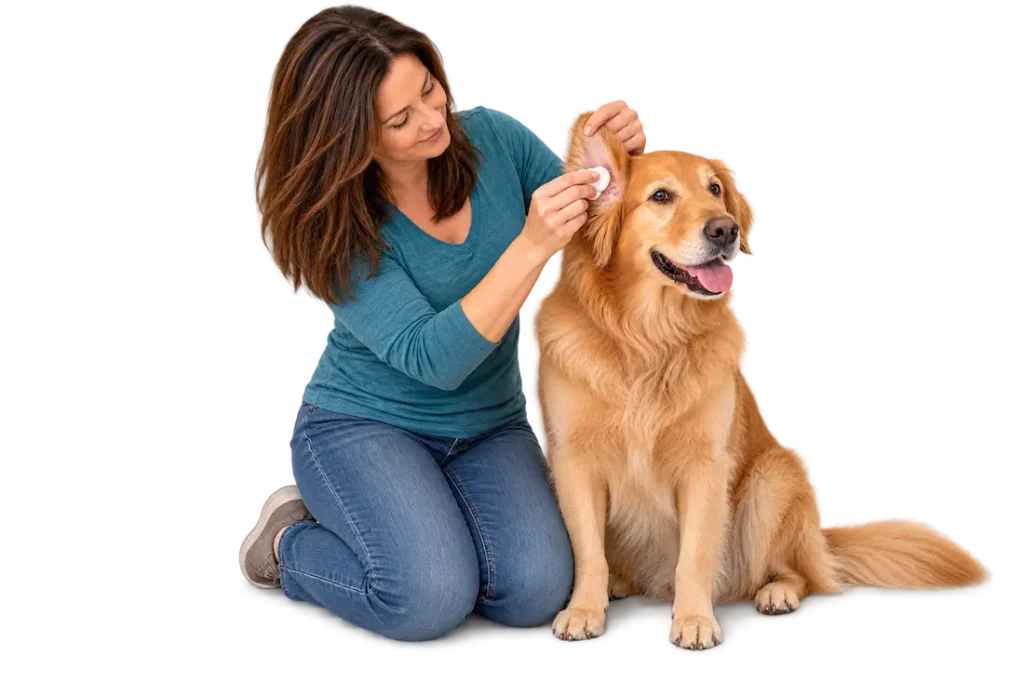
When Should You Clean Your Dog’s Ears?
Not every dog needs their ears cleaned regularly. In fact, if your dog’s ears look healthy and clean, it’s usually best to leave them alone.
Get into the habit of having a quick look inside your dog’s ears so you know what’s normal for your dog. If you notice a buildup of wax or dirt in an otherwise healthy-looking ear, it may be time for a clean.
Some dogs need their ears checked more often than others, particularly if they swim regularly or tend to have problems with their ears. But there’s no one-size-fits-all cleaning schedule—and cleaning too often can irritate the ear.
Before you reach for the ear cleaner…
If your dog’s ear is painful, very red or swollen, has an unusual smell or discharge, or your dog keeps scratching their ear or shaking their head, don’t assume it just needs a good clean. Those can be signs of an ear problem that needs veterinary attention.
If something doesn’t look right, check with your vet before cleaning the ear.
Before You Start: Get Your Dog Comfortable
If your dog squirms the second you go near their ears, don’t wait until you’ve got a bottle of ear cleaner in your hand to introduce the idea!
Spend a few minutes over several days getting your dog comfortable with having their ears touched and handled. Take it slowly and use plenty of treats:
Have your dog sit comfortably in front of you.
Gently touch an ear, then give a treat.
Gently lift the ear and massage around the base, then give another treat.
Gradually handle the ear for a little longer each time as your dog becomes comfortable.
The aim is to make having their ears handled feel like no big deal. It’ll make the actual cleaning much easier for both of you.
If your dog becomes frightened, very uncomfortable or tries to bite when you handle their ears, don’t force it. Pain can make even the friendliest dog react unexpectedly, so get advice from your vet rather than trying to battle through an ear cleaning.
What You’ll Need to Clean Your Dog’s Ears
Get everything together before you bring your dog over. Trust me, once you get started, you don’t want to discover the towel is in another room!
You’ll need:
- A dog ear-cleaning solution — use one intended for dogs and, if you’re unsure which is suitable for your dog, ask your veterinarian.
- Cotton balls, cotton pads or gauze — for gently wiping away loosened wax and debris you can easily reach.
- A towel — have this within grabbing distance. There will be head shaking!
- Treats — particularly useful if your dog is still getting used to having their ears handled.
- Another pair of hands, if needed — someone to calmly help can make the whole process easier.
Skip the cotton swabs
Don’t put cotton swabs—or anything else—down into your dog’s ear canal. You can push debris farther inside or damage the ear. Stick to gently wiping the parts you can safely reach.
Cleaning Dogs’ Ears: Step-by-Step Guide
Got everything ready? Find somewhere you don’t mind getting a little messy. I find a bathroom or laundry room works well—and if your dog is particularly wriggly, another pair of hands can be very useful.
Then take it one ear at a time.
1. Have One Last Look at the Ear
Lift the ear flap and check what you’re dealing with before you add any cleaner.
If you see the warning signs we talked about earlier—significant redness, swelling, discharge, a strong odor or obvious pain—stop here and contact your vet rather than cleaning the ear.
2. Add the Ear Cleaner
Holding the ear flap up, use the dog ear-cleaning solution according to the directions on the product or your veterinarian’s instructions.
Keep the tip of the bottle out of your dog’s ear canal and follow the cleaner’s directions for use.
3. Massage the Base of the Ear
Gently massage the base of the ear for around 20–30 seconds, or as directed for the cleaner you’re using.
You may hear a squishing sound as you massage. This helps the cleaner work its way around the ear canal and loosen wax and debris.
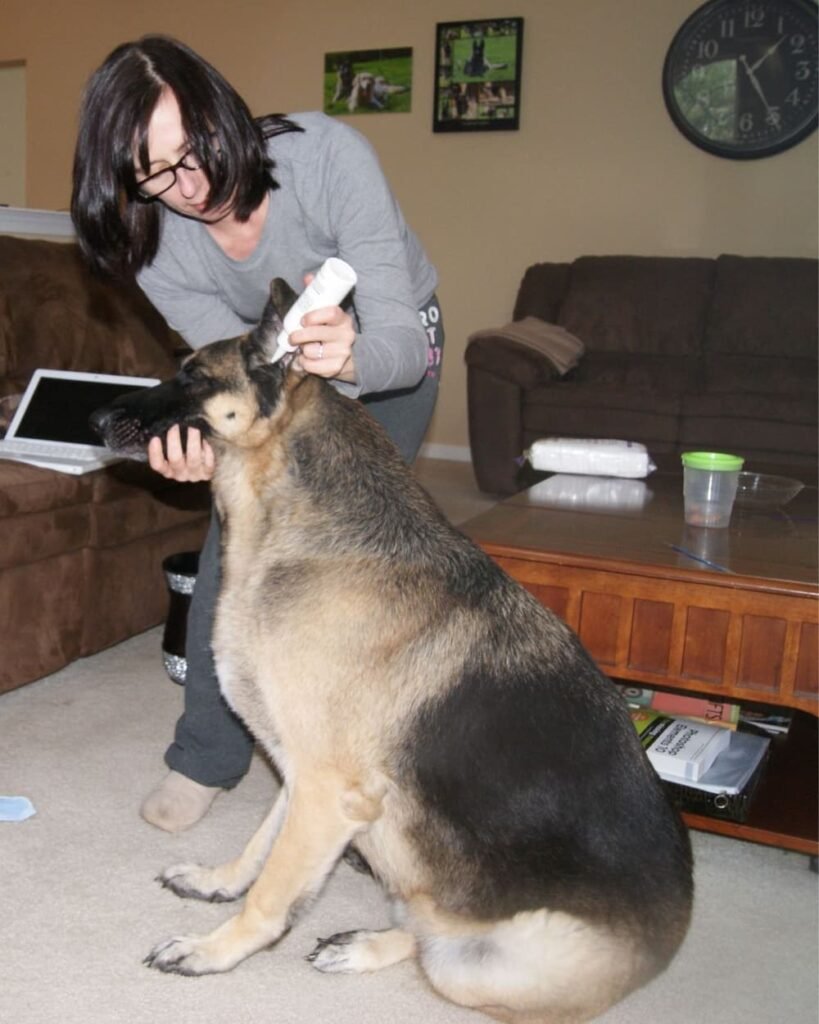
4. Stand Back and Let Your Dog Shake!
Now let go and allow your dog to shake their head.
And trust me, they probably will—which is why I told you to keep that towel handy!
The shaking helps bring loosened cleaner and debris up and out where you can reach it.
5. Gently Wipe Away What You Can Reach
Use a cotton ball, cotton pad or gauze to gently wipe away the cleaner, wax and debris that has come up into the accessible part of the ear and around the ear flap.
Don’t push anything down into the ear canal and don’t go hunting for every last bit of wax. The goal is to remove what you can safely reach, not give the inside of the ear a spring clean.
Use fresh cotton or gauze as needed rather than repeatedly wiping with a dirty piece.
6. Repeat With the Other Ear
When you’ve finished with the first ear, repeat the process on the other side using fresh cotton balls, pads or gauze.
Then give your dog a treat and plenty of praise.
Job done!
How Often Should You Clean Your Dog’s Ears?
There isn’t a one-size-fits-all answer. Some dogs rarely need their ears cleaned, while others need a little more help keeping them clean.
Rather than automatically cleaning your dog’s ears every week or month, check them regularly and get to know what’s normal for your dog.
Dogs that swim frequently, have floppy ears or are prone to ear problems may need more attention, but that doesn’t necessarily mean more cleaning is always better. Over-cleaning can irritate the ear too.
If your dog repeatedly develops dirty, smelly or uncomfortable ears, don’t simply clean them more often. It’s worth talking to your vet to find out what’s causing the problem.
The simple rule:
Healthy and clean? Leave them alone.
Dirty but otherwise normal? It may be time for a clean.
Red, sore, smelly or producing unusual discharge? Call your vet.
When You Shouldn’t Clean Your Dog’s Ears
Sometimes an ear that looks dirty doesn’t need cleaning—it needs a vet.
Don’t clean the ear first if your dog seems to be in pain or you notice signs that something isn’t right. Cleaning an already sore or inflamed ear can be uncomfortable, and it may make it harder for your vet to see what was going on before you cleaned it.
For more about common ear problems and what those symptoms can mean, see my dog ear care guide.
Call your vet if you notice:
- Redness or swelling
- An unpleasant or unusual smell
- Discharge
- Frequent head shaking
- Persistent scratching or pawing at the ear
- Pain or sensitivity when the ear is touched
- A sudden change in how the ear looks or smells
And if your dog suddenly won’t let you touch an ear that they’re normally quite happy for you to handle, pay attention to that too. They’re telling you something has changed.
Ear cleaning is for routine care of otherwise healthy ears. If you suspect there’s a problem, let your vet take a look before reaching for the cleaner.
What About Swimming and Bathing?
If your dog loves the water, it’s worth paying a little extra attention to their ears. After swimming or bathing, check the ears and gently dry the outer ear and ear flap if they’re wet.
That doesn’t mean you need to reach for the ear cleaner every time your dog gets wet. Some dogs rarely need cleaning, while others—particularly dogs with a history of ear problems—may have a routine recommended by their vet.
If your dog regularly develops ear trouble after swimming, ask your vet what they recommend for your dog rather than experimenting with homemade drying solutions or automatically cleaning after every swim.
A Little Ear Care Goes a Long Way
Cleaning your dog’s ears doesn’t have to turn into a wrestling match. Get them comfortable with having their ears handled, have everything ready before you start, and only clean what you can safely reach.
Most importantly, get to know what’s normal for your dog. If their ears are clean and healthy, leave them alone. And if something looks, smells or feels wrong, let your vet take a look rather than trying to clean the problem away.
Want to know more about looking after your dog’s ears? My dog ear care guide covers routine ear care, common problems and the signs to watch for.
Looking after your dog’s ears is just one part of everyday care. For more practical advice on keeping your dog healthy, comfortable and well cared for, visit my Dog Care Tips guide.
References
Merck Veterinary Manual. How to Clean Your Dog’s Ears.
How to Clean Your Dog’s Ears – Merck Veterinary ManualVCA Animal Hospitals. Ear Cleaning and Administering Ear Medication in Dogs.
Ear Cleaning and Administering Ear Medication in Dogs – VCA Animal HospitalsMerck Veterinary Manual. Ear Infections and Otitis Externa in Dogs.
Ear Infections and Otitis Externa in Dogs – Merck Veterinary Manual